Geologists are eager to find sedimentary layering on Mars because it can tell us much about the history of changing depositional environments that dominated the planet in the past. However, different processes that produce features similar to sedimentary layering must be ruled out first, before we can accept this interpretation.
Horizontal striations in rock units can be caused by a variety of mechanisms. For example, tectonic compression and extension sometimes produce parallel fractures that resemble laminations. Episodic or uneven erosion can form terraces that look like layers in low resolution images. How can we distinguish sedimentary layering from other landforms that are similar in appearance?
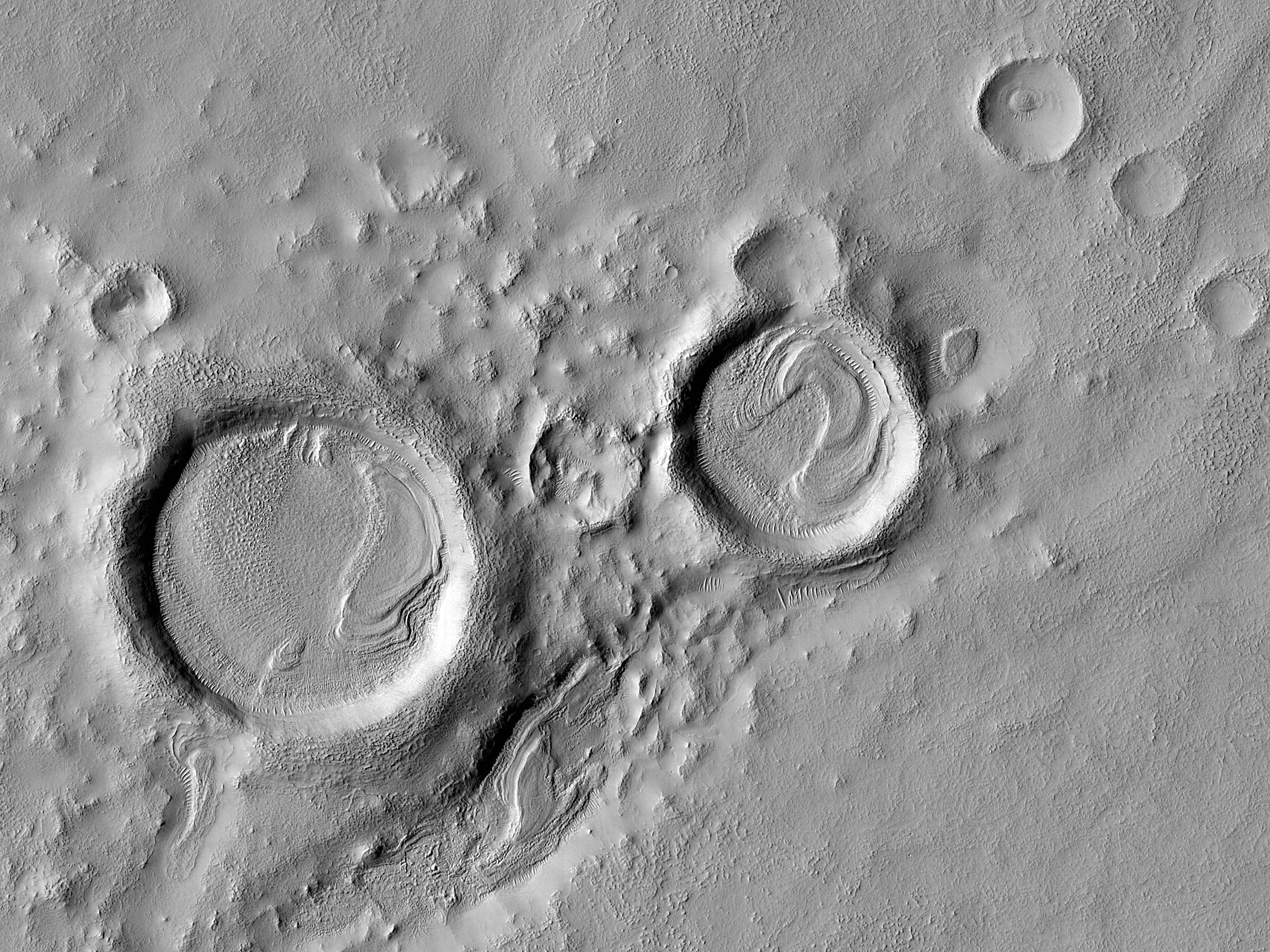
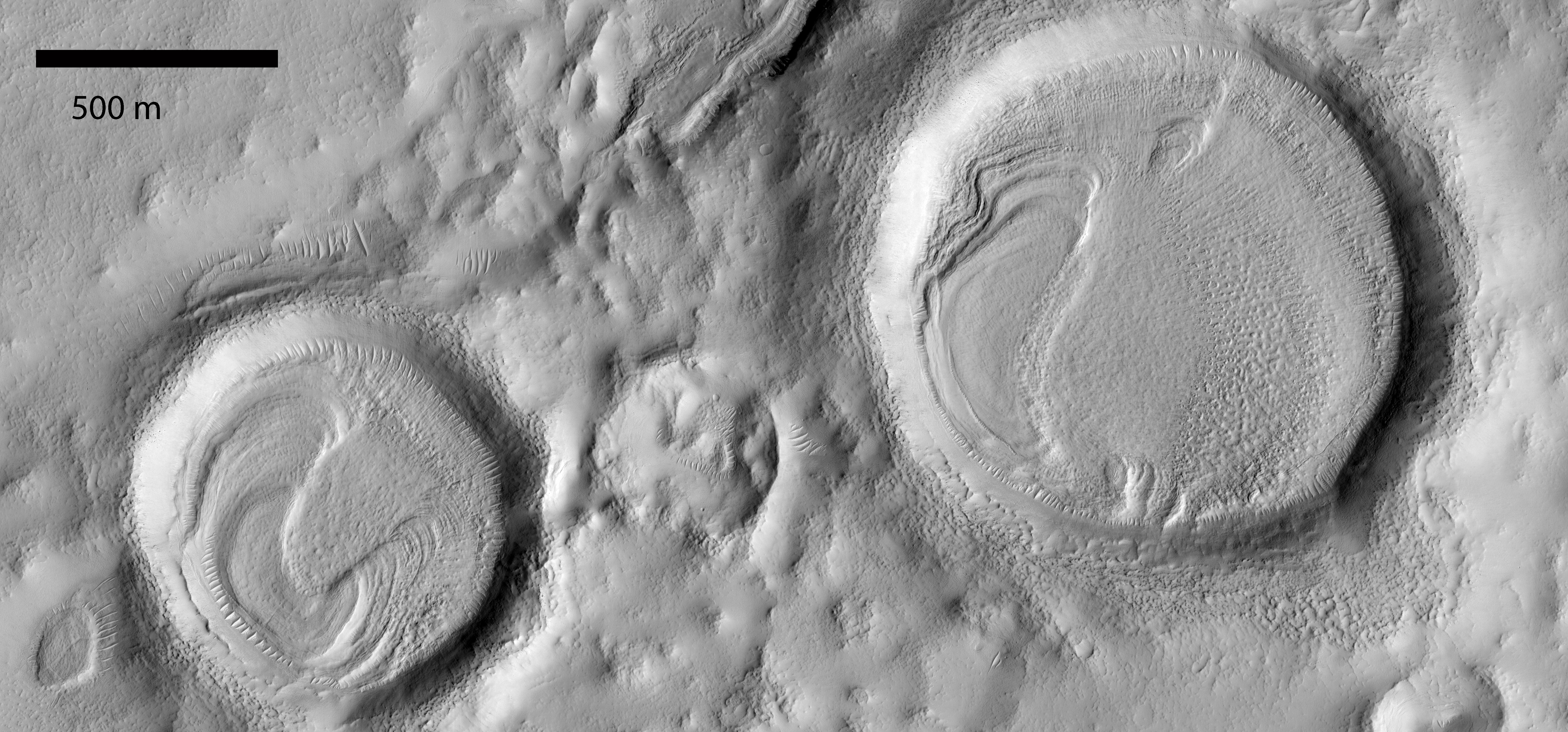
Here in the northern plains, craters once filled with ice-rich sediment appear to have been eroded by sublimation (evaporation of solid ice) in a process that depends upon the direction of the Sun and thus varies with the season and the time of day. Over time, this sublimation has produced
pancake-like terracesthat are easily mistaken for sedimentary layers, but lack key diagnostic features of stratigraphic sections. (Note: in the cutout, North is approximately down.)
One important indication of sedimentary layering is any evidence of changes in the composition of materials deposited over time, as illustrated by differences in color or albedo between individual layers. These terraces, in contrast, show no signs of compositional stratification. Changes in mechanical properties such as competence or cohesion are often indicated by cliffs and other changes in slope in layered sedimentary deposits, but are absent here. High resolution images from HiRISE are necessary to see such subtle features and confidently identify sedimentary sections from orbit.
ID:
ESP_088193_2175date: 20 May 2025
altitude: 293 km
https://uahirise.org/hipod/ESP_088193_2175
NASA/JPL-Caltech/University of Arizona
#Mars #science #NASA