Science
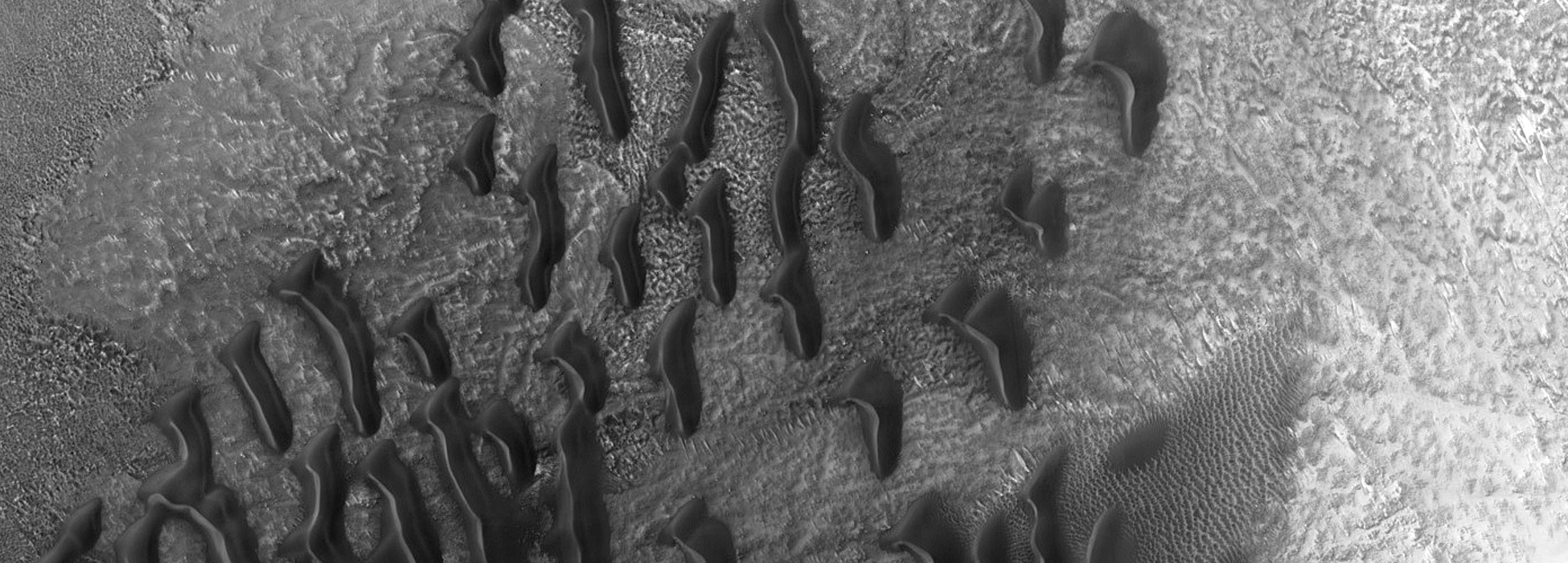
Boundary Condition Controls on the High-Sand-Flux Regions of Mars
Matthew Chojnacki, Maria E. Banks, Lori K. Fenton, and Anna C. Urso
Abstract
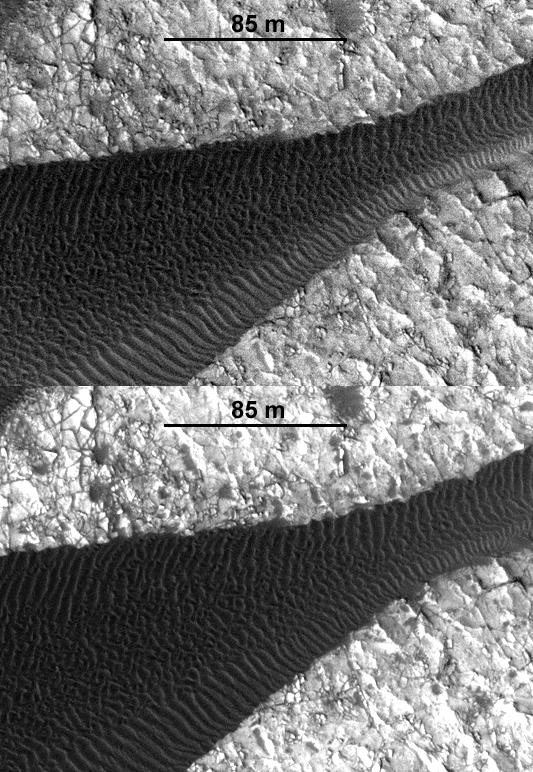
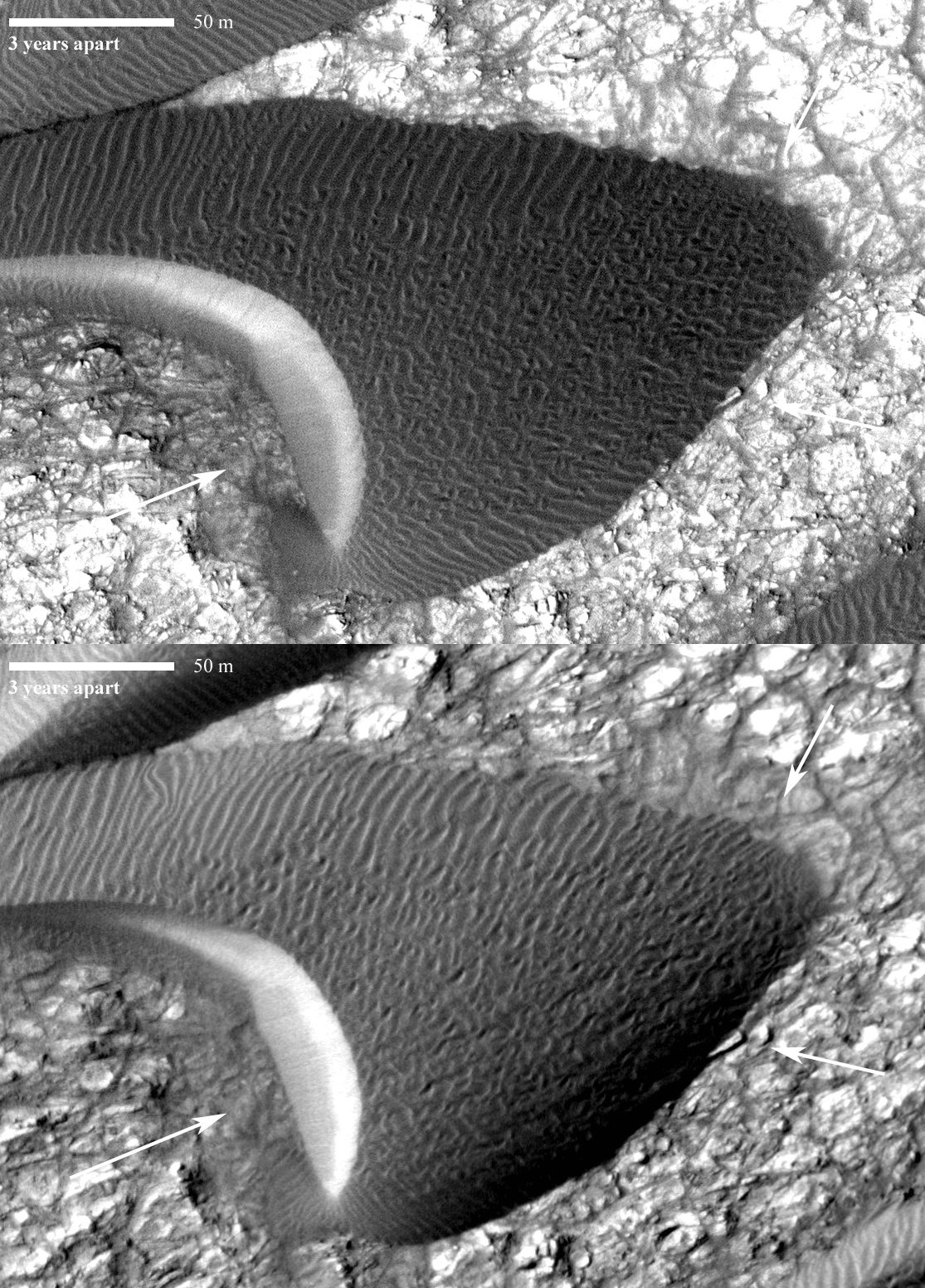
Wind has been an enduring geologic agent throughout the history of Mars, but it is often unclear where and why sediment is mobile in the current epoch. We investigated whether
eolian bed-form (dune and ripple) transport rates are depressed or enhanced in some areas by local or regional boundary conditions (e.g., topography, sand supply/availability).
Article on GeoScience World
View and download animations

Planet Four: Probing Springtime Winds on Mars by Mapping the Southern Polar CO2 Jet Deposits
K.-Michael Aye, Megan E.Schwamb, Ganna Portyankina, Candice J.Hansen, Adam McMaster, Grant R.M. Miller, Brian Carstensen, Christopher Snyder, Michael Parrish,
Stuart Lynn, Chuhong Maic, David Miller, Robert J. Simpson, Arfon M.Smith
Abstract
The springtime sublimation process of Mars’ southern seasonal polar CO
2 ice cap features dark fan-shaped deposits appearing on the top of the thawing ice sheet.
The fan material likely originates from the surface below the ice sheet, brought up via CO
2 jets breaking through the seasonal ice cap. Once the dust and dirt is released into
the atmosphere, the material may be blown by the surface winds into the dark streaks visible from orbit.
Article on Science Direct
Wind-Driven Erosion and Exposure Potential at Mars 2020 Rover Candidate-Landing Sites
Matthew Chojnacki, Maria Banks, and Anna Urso
Abstract
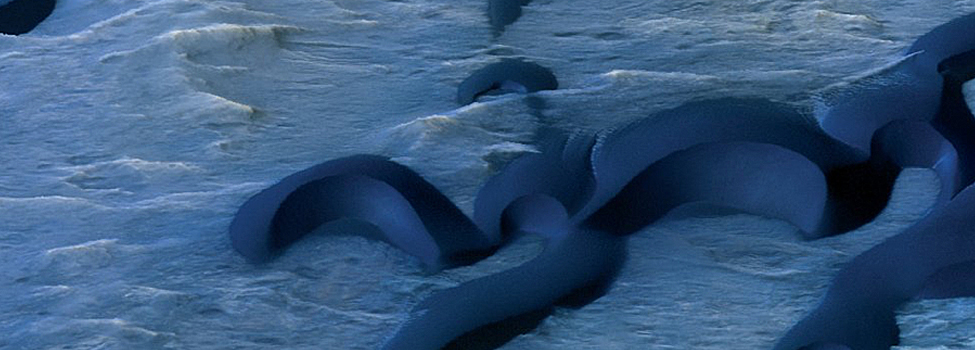
Wind-blown dune sand can wear away the Martian surface and uncover geologic units, which have not been exposed to prolonged space radiation.
We studied migrating sand dunes at the eight potential Mars 2020 Rover landing sites, a mission that will explore astrobiologically relevant
ancient environments. These locations may be favorable for the preservation of ancient life and organics for sampling by future Mars missions,
including the Mars 2020 mission. Results indicate that candidate sites at Syrtis Major and Jezero crater showed the most evidence for ongoing
sand transport and erosion potential.
Article at AGU Publications
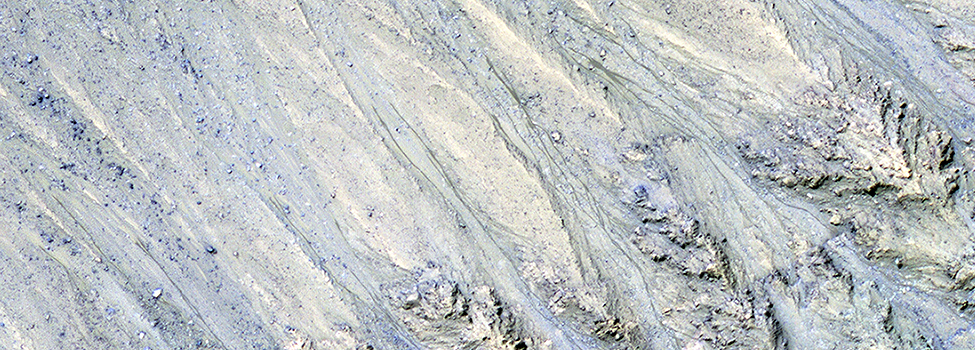
Granular Flows at Recurring Slope Lineae on Mars Indicate a Limited Role for Liquid Water
Colin M. Dundas, Alfred S. McEwen, Matthew Chojnacki, Moses P. Milazzo, Shane Byrne, Jim N. McElwaine & Anna Urso
Abstract
Recent liquid water flow on Mars has been proposed based on geomorphological features, such as gullies. Recurring slope lineae—seasonal flows that are darker
than their surroundings—are candidate locations for seeping liquid water on Mars today, but their formation mechanism remains unclear. Topographical
analysis shows that the terminal slopes of recurring slope lineae match the stopping angle for granular flows of cohesionless sand in active Martian aeolian dunes.
In Eos Chasma, linea lengths vary widely and are longer where there are more extensive angle-of-repose slopes, inconsistent with models for water sources.
These observations suggest that recurring slope lineae are granular flows. The preference for warm seasons and the detection of hydrated salts are consistent
with some role for water in their initiation. However, liquid water volumes may be small or zero, alleviating planetary protection concerns about habitable environments.
Article at Nature Geoscience (subscription required)
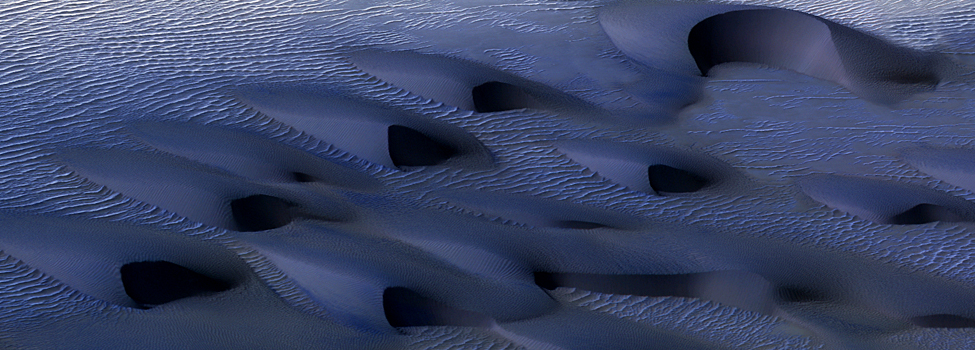
Aeolian Dune Sediment Flux Heterogeneity in Meridiani Planum, Mars
Matthew Chojnacki, Anna Urso, Lori K. Fenton, Timothy I. Michaels
Abstract
It is now known unambiguously that wind-driven bedform activity is occurring on the surface of Mars today, including early detections of active sand dunes in Meridiani Planum’s Endeavour crater.
Many of these reports are only based on a few sets of observations of relatively isolated bedforms and lack regional context.Here, we investigate aeolian activity across central Meridiani Planum
and test the hypothesis that dune sites surrounding Endeavour crater are also active and part of region-wide sediment migration driven by northwesterly winds. All 13 dune fields investigated clearly showed evidence
for activity and the majority exhibited dune migration (average rates of 0.6 m/Earth-year).Observations indicate substantial geographic and temporal heterogeneity of dune crest fluxes across
the area and per site. Locations with multiple time steps indicate dune sand fluxes can vary by a factor of five, providing evidence for short periods of rapid migration followed by near-stagnation.
In contrast, measurements at other sites are nearly identical, indicating that some dunes are in a steady-state as they migrate. The observed sediment transport direction was consistent with a
regional northeasterly-to-northwesterly wind regime, revealing more variations than were appreciated from earlier, more localized studies. Craters containing shallow, degraded, flat-floored interiors tended
to have dunes with high sediment fluxes/activity, whereas local kilometer-scale topographic obstructions (e.g., central peaks, yardangs) were found to be inversely correlated with dune mobility.
Finally, the previous, more limited detections of dune activity in Endeavour crater have been shown to be representative of a broader, region-wide pattern of dune motion.
Animations
Article at Science Direct
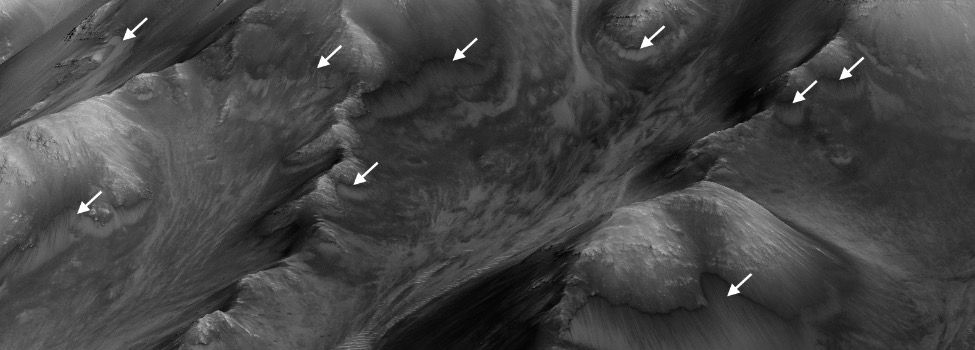
Geologic Context of Recurring Slope Lineae in Melas and Coprates Chasmata, Mars
Matthew Chojnacki, Alfred McEwen, Colin Dundas, Lujendra Ojha, Anna Urso, and Sarah Sutton.
Abstract
One of the major Mars discoveries of recent years is the existence of Recurring Slope Lineae (RSL), which suggests that liquid water occurs on or
near the surface of Mars today. These dark and narrow features emerge from steep, rocky exposures, and incrementally grow, fade, and re-form on a
seasonal basis and are detected in images from the High Resolution Imaging Science Experiment (HiRISE) camera. RSL are known to occur at scattered
mid-latitude and equatorial sites with little spatial connection to one another. One major exception is the steep, low-albedo slopes of Melas and
Coprates Chasmata, in Valles Marineris where RSL are detected among diverse geologic surfaces (e.g., bedrock, talus) and landforms (e.g., inselbergs, landslides).
New images show topographic changes including sediment deposition on active RSL slopes. Mid-wall locations in Coprates and Melas appear to
have more areally extensively abundant RSL and related fans as compared with other RSL sites found on Mars. Water budget estimates for regional RSL
are on the order of 105 to 106 m3 of fluid, for depths of 10 to 100 mm, and suggest a significant amount of near-surface water might be present.
Many RSL are concentrated near local topographic highs, such as ridge crests or peaks, which is challenging to explain via groundwater or ice
without a recharge mechanism. Collectively, results provide additional support for the notion that significant amounts of near-surface water can be
found on Mars today, and suggest a widespread mechanism, possibly related to the atmosphere, is recharging RSL sources.
Animations
Article at JGR-Planets
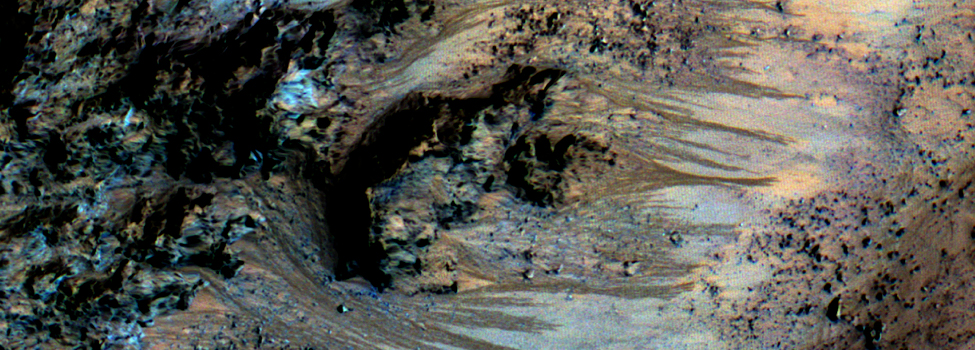
Spectral evidence for hydrated salts in recurring slope lineae on Mars
Lujendra Ojha, Mary Beth Wilhelm, Scott L. Murchie, Alfred S. McEwen, James J. Wray, Jennifer Hanley, Marion Massé & Matt Chojnacki
Abstract
Determining whether liquid water exists on the Martian surface is central to understanding the hydrologic cycle and potential
for extant life on Mars. Recurring slope lineae, narrow streaks of low reflectance compared to the surrounding terrain, appear
and grow incrementally in the downslope direction during warm seasons when temperatures reach about 250–300K, a pattern
consistent with the transient flow of a volatile species. Brine flows (or seeps) have been proposed to explain the formation
of recurring slope lineae, yet no direct evidence for either liquid water or hydrated salts has been found4. Here we analyze
spectral data from the Compact Reconnaissance Imaging Spectrometer for Mars instrument onboard the Mars Reconnaissance Orbiter
from four different locations where recurring slope lineae are present. We find evidence for hydrated salts at all four locations
in the seasons when recurring slope lineae are most extensive, which suggests that the source of hydration is recurring slope
lineae activity. The hydrated salts most consistent with the spectral absorption features we detect are magnesium perchlorate,
magnesium chlorate and sodium perchlorate. Our findings strongly support the hypothesis that recurring slope lineae form as a
result of contemporary water activity on Mars.
Download images and media (243MB)
Nature Geoscience (paywall)
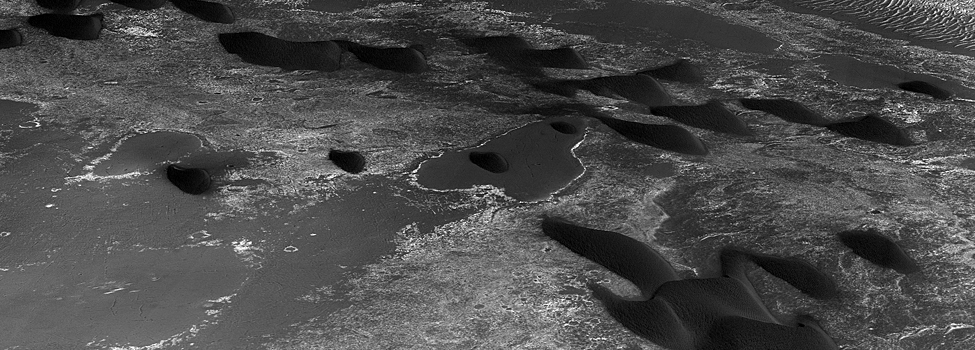
Persistent Aeolian Activity at Endeavour Crater, Meridiani Planum, Mars: New Observations from Orbit and the Surface
Matthew Chojnacki, Jeffrey R. Johnson, Jeffrey E. Moersch, Lori K. Fenton, Timothy I. Michaels, and James F. Bell III.
Abstract
Aeolian-driven bedform activity is now known to occur in many regions of Mars, based on surface and orbital observation of contemporary martian ripple and dune mobility events.
Many of these sites have only been monitored with sufficient resolution data for the last few Mars years, when the High Resolution Imaging Science Experiment (HiRISE) began acquiring images of Mars.
One exception is the well-monitored Endeavour crater in Meridiani Planum, which was one of the first known sites of unambiguous dune activity (migration and deflation). However, those early
detections used lower resolution data over longer temporal baselines (versus the HIRISE imagery now available), leaving some measurements poorly constrained. New orbital and surface observations of
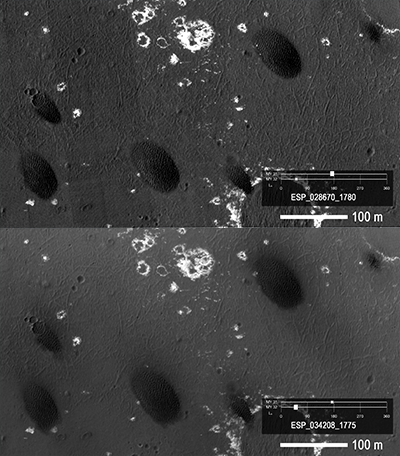
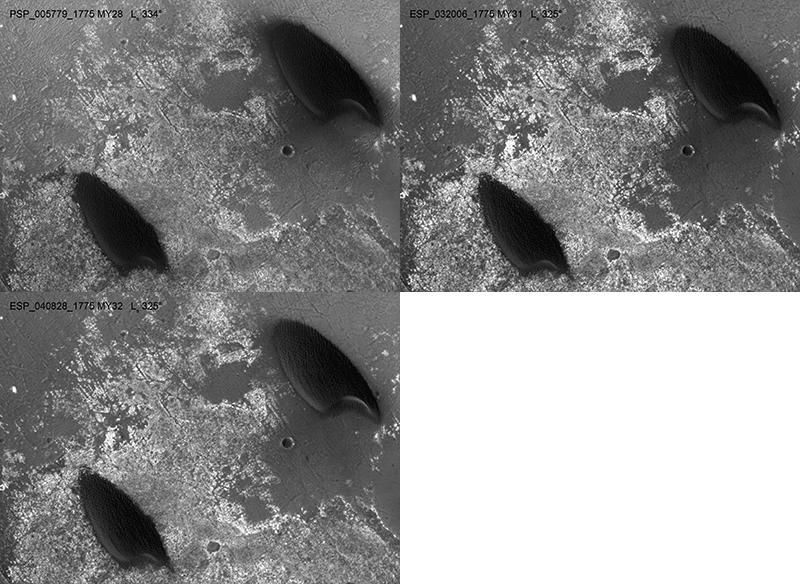
Endeavour show multiple spatial (cm, m, km) and temporal (seasons, Mars Year) scales of aeolian-driven surface change, which confirms earlier reports. Dome dunes in the eastern portion of the
crater persistently deflate, disseminating dark sand across lighter-toned regolith and/or eroded bright dust, and likely also contribute to the crater interior’s episodic decreases in
orbital albedo measurements. Other dome dunes are detected with the highest migration rates (4-12 m per Mars year) and volumetric sand fluxes reported yet for Mars. Estimated dune construction
times or “turnover times” here and elsewhere on Mars are significantly shorter than martian obliquity cycles, implying that it is not necessary to invoke paleoclimate wind
regimes to explain current dune morphologies. Located on the crater rim, the Opportunity rover detected evidence for near- and far-field aeolian-driven activity, with observations
of spherules/sand movement in the rover workspace, bedform albedo alteration, and dust-lifting events. Observations of intracrater dunes show periodic shifting dark streaks that
significantly constrain local wind regimes (directionality and seasonality). Constraints on wind directions from surface and orbital images show that aeolian bedforms can be extremely
active in bi-, and possibly tri-, modal wind regimes, and during periods without major dust storms.
 Article on Science Direct
Transient Bright “Halos” on the South Polar Residual Cap of Mars: Implications for Mass-Balance
Patricio Becerra,
Shane Byrne, Adrian J. Brown
Abstract
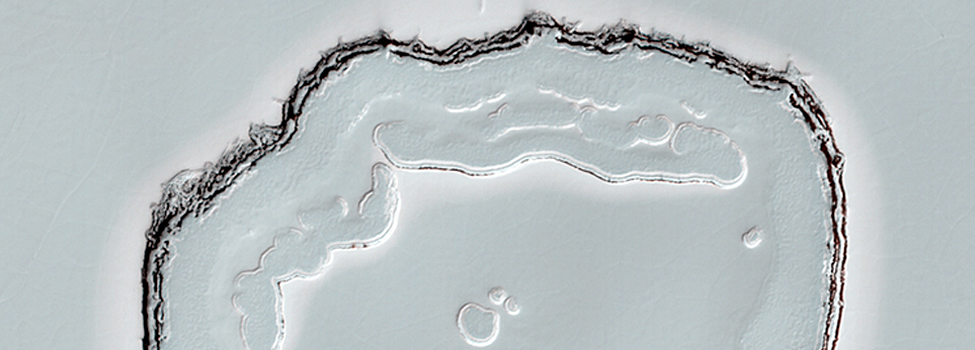
Spacecraft imaging of Mars’ south polar region during mid-southern summer of Mars Year 28 (2007) observed bright halo-like features surrounding
many of the pits, scarps and slopes of the heavily eroded carbon dioxide ice of the South Polar Residual Cap (SPRC). These features had not been
observed before, and have not been observed since. We report on the results of an observational study of these features, and spectral modeling of
the SPRC surface at the time of their appearance. Image analysis was performed using data from MRO’s Context Camera (CTX), and High Resolution
Imaging Science Experiment (HiRISE), as well as images from Mars Global Surveyor’s (MGS) Mars Orbiter Camera (MOC). Data from MRO’s
Compact Reconnaissance Imaging Spectrometer for Mars (CRISM) were used for the spectral analysis of the SPRC ice at the time of the halos. These
data were compared with a Hapke reflectance model of the surface to constrain the formation mechanism of these features. We find that the unique
appearance of these features is intimately linked to a near-perihelion global dust storm that occurred shortly before the halos were observed.
The combination of vigorous summertime sublimation of carbon dioxide ice from sloped surfaces on the SPRC and simultaneous settling of dust
from the global storm, resulted in a sublimation wind that deflected settling dust particles away from the edges of these slopes, keeping these
areas relatively free of dust compared to the rest of the cap. The fact that the halos were not exhumed in subsequent years indicates a positive
mass-balance for flat portions of the SPRC in those years. A net accumulation mass-balance on flat surfaces of the SPRC is required to preserve
the cap, as it is constantly being eroded by the expansion of the pits and scarps that populate its surface.
Article on Science Direct

Valles Marineris Dune Sediment Provenance and Pathways
Matthew Chojnacki, Devon M. Burr, Jeffrey E. Moersch, James J. Wray
Abstract
Although low-albedo sand is a prevalent component of the martian surface, sources and pathways of the sands are uncertain. As one of the principal present-day martian sediment sinks, the Valles Marineris (VM)
rift system hosts a diversity of dune field populations associated with a variety of landforms that serve as potential sediment sources, including spur-and-gully walls, interior layered deposits (ILDs), and
landslides. Here, we test the hypothesis that VM dune fields are largely derived from a variety of local and regional (intra-rift) sediment sources. Results show several dune fields are superposed on ancient
wall massifs and ILDs that are topographically isolated from extra-rift sand sources. Spectral analysis of dune sand reveals compositional heterogeneity at the basinal-, dune field-, and dune-scales,
arguing for discrete, relatively unmixed sediment sources. In Coprates and Melas chasmata, mapping is consistent with the principle sand source for dunes being Noachian-aged upper and lower wall materials
composed of primary (igneous) minerals and glasses, some of which show evidence for alteration. In contrast, dune fields in Capri, Juventae, and Ganges chasmata show evidence for partial sediment derivation
from adjacent Early Hesperian-aged hydrated sulfate-bearing ILD units. This finding indicates that these ILDs act as secondary sand sources. Dunes containing “soft” secondary minerals (e.g., monohydrated sulfate)
are unlikely to have been derived from distant sources due to the physical weathering of sand grains during transport. Isolated extra-rift dune fields, sand sheets, and sand patches are located on the plateaus
surrounding VM and the adjoining areas, but do not form interconnected networks of sand pathways into the rift. If past wind regimes (with respect to directionality and seasonality) were consistent with more recent
regimes inferred from morphological analysis (i.e., dune slip faces, wind streaks), and were sufficient in strength and duration, small dune populations within Aurorae Chaos and north of eastern VM might have
resulted from extended sand pathways into VM. However, we favor local and regional derivation of dune sand from a variety of intra-rift lithologic sources for most cases. Dune sand sources and the mechanism by
which the sand is liberated are discussed in the context of findings described herein, but are broadly applicable to analysis of sediment production elsewhere on Mars.
Article on Science Direct
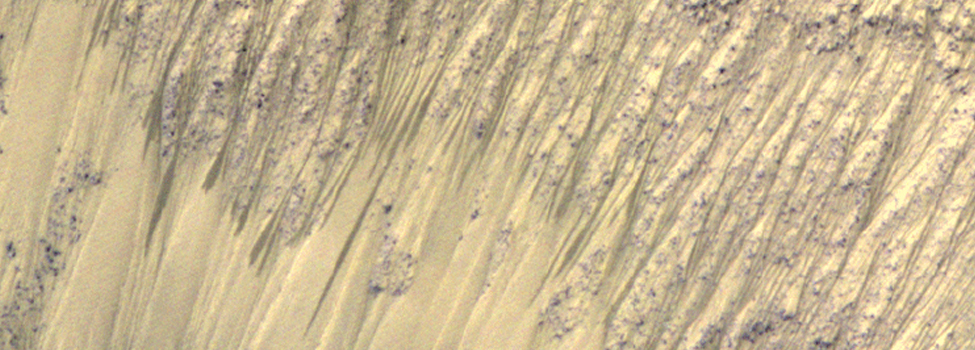
Recurring Slope Lineae in Equatorial Regions of Mars
Alfred S. McEwen, Colin M. Dundas, Sarah S. Mattson, Anthony D. Toigo, Lujendra Ojha, James J. Wray, Matthew Chojnacki, Shane Byrne, Scott L. Murchie and Nicolas Thomas
Abstract
The presence of liquid water is a requirement of habitability on a planet. Possible indicators of liquid surface water on Mars include intermittent flow-like features
observed on sloping terrains. These recurring slope lineae are narrow, dark markings on steep slopes that appear and incrementally lengthen during warm seasons on low-albedo
surfaces. The lineae fade in cooler seasons and recur over multiple Mars years. Recurring slope lineae were initially reported to appear and lengthen at mid-latitudes
in the late southern spring and summer and are more common on equator-facing slopes where and when the peak surface temperatures are higher. Here we report extensive
recurring slope linea activity in equatorial regions of Mars, particularly in the deep canyons of Valles Marineris, from analysis of data acquired by the Mars
Reconnaissance Orbiter. We observe the lineae to be most active in seasons when the slopes often face the sun. Expected peak temperatures suggest that activity
may not depend solely on temperature. Although the origin of the recurring slope lineae remains an open question, our observations are consistent with
intermittent flow of briny water. Such an origin suggests surprisingly abundant liquid water in some near-surface equatorial regions of Mars.
Nature Geoscience
Download the AGU presentation slide
Download the presentation video clip (720p, MP4)
Observation details page for the above image
ANIMATED GIFS OF RSLs (Please note the animations may take a moment to load fully)
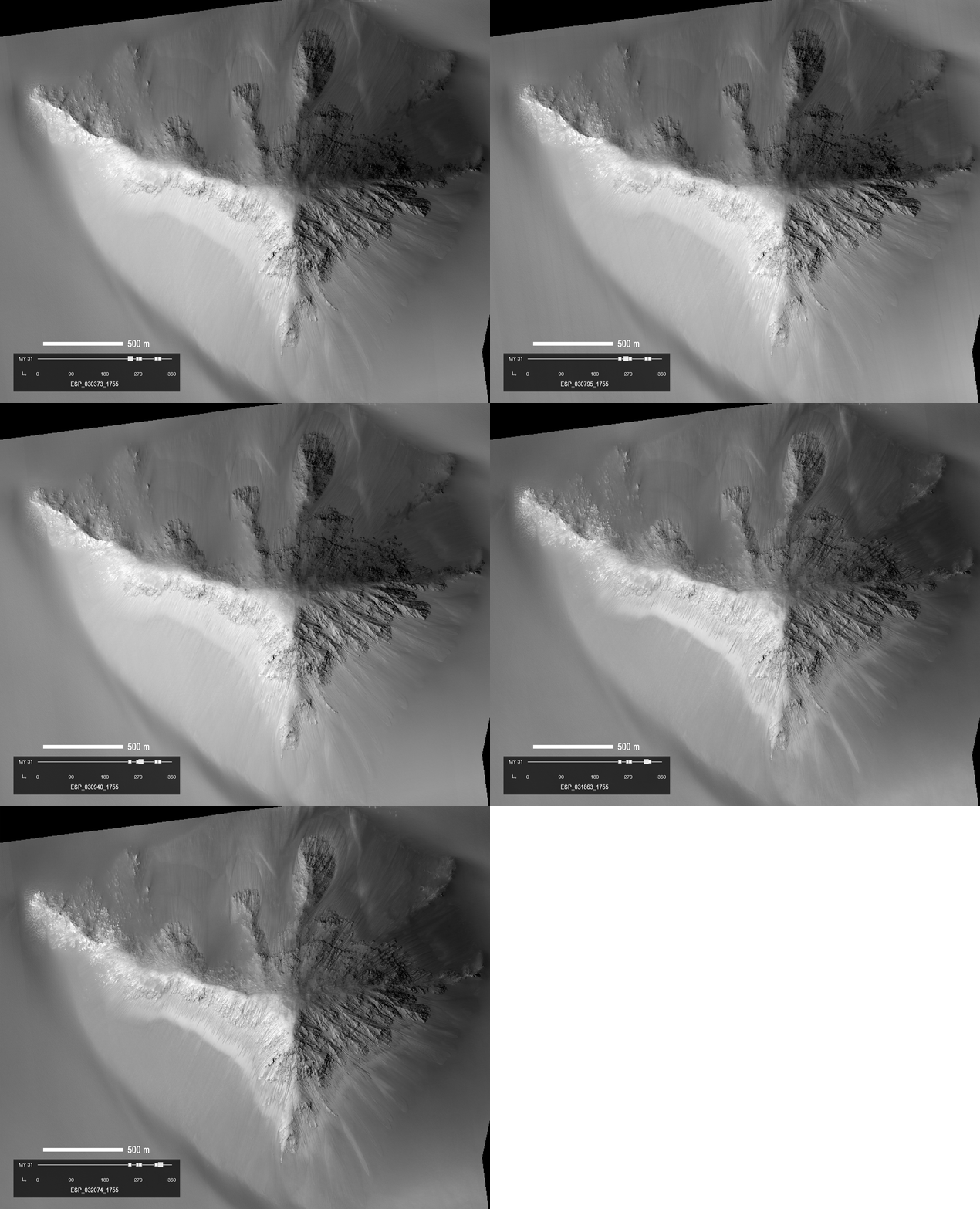
Heavily dissected hill in Juventae Chasm
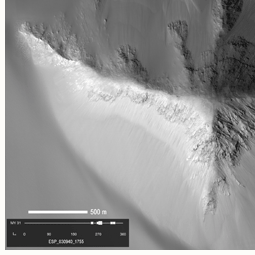
Sequence of 5 HiRISE images of a heavily-dissected (eroded) hill in southern Juventae Chasm, Mars (latitude 4.7 degrees S, longitude 298.6 degrees E).
This sequence is from the recently completed Mars Year (31), and RSL were also seen here in Mars Year 28, so they have recurred. The season of these
images is late spring to early summer in the southern hemisphere, and include perihelion (Mars closest to the sun in its orbit). Activity is strongly
concentrated on the south-facing slopes, which are the warmest slopes this time of year. The RSL are closely associated with “small” (for Mars) gullies.
Images reduced to 1 m/pixel scale. (31MB)
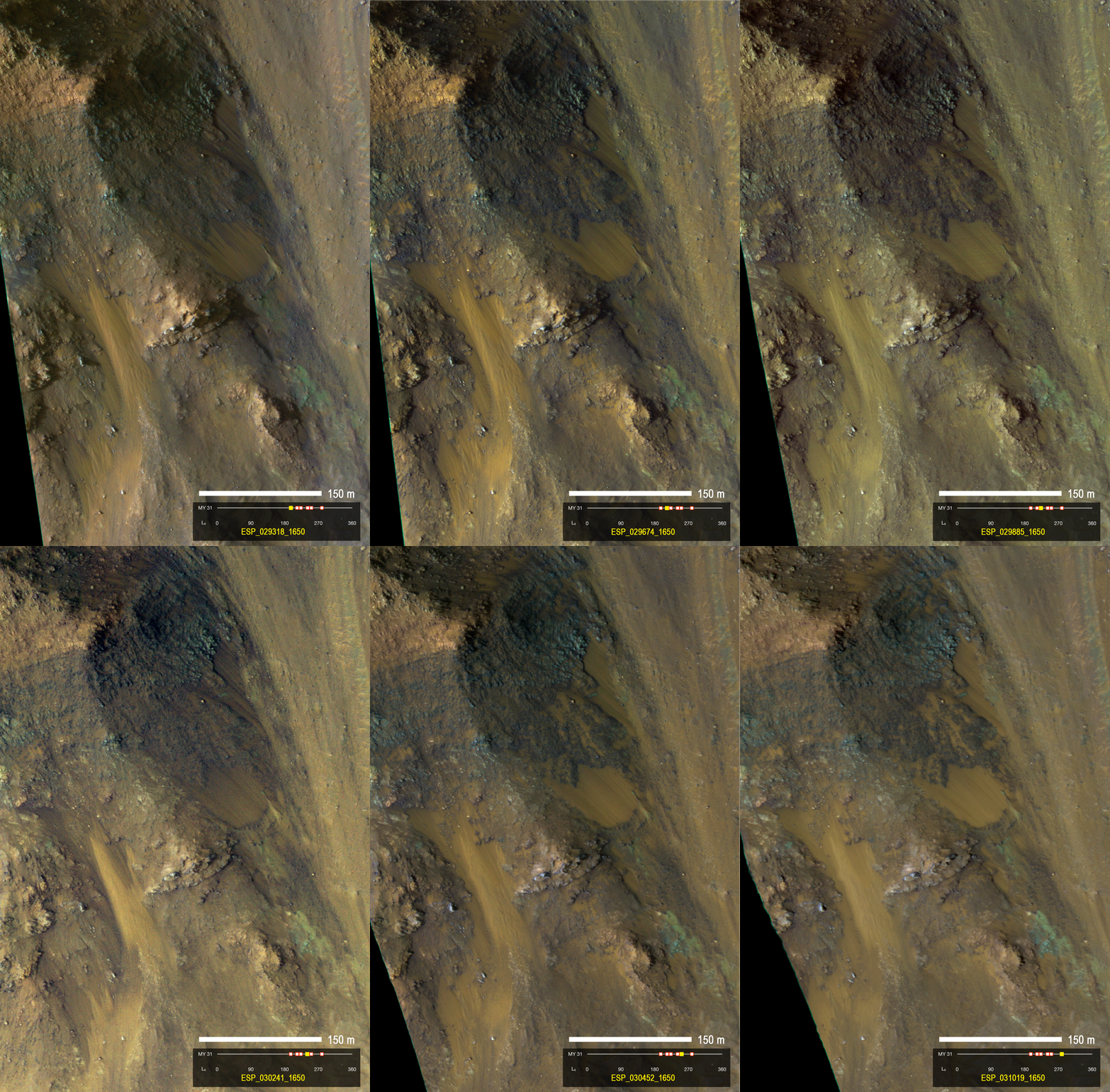
RSL and darkening fans in East Coprates Chasm
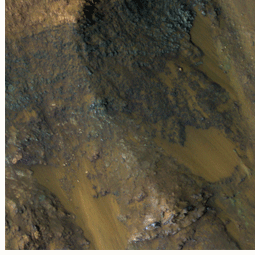
Sequence of 6 images showing a small area of steep slopes with RSL activity (latitude 14.7 degrees S, longitude 304.6 degrees E). The sequence is in Mars Year 31,
southern spring. Note that some of the fans that RSL flow over became darker and brighter over time
(
see also figure S2 of the supplementary material of the Nature Geoscience paper).
There are many other such fans in this region that darkened and brightened at the same times. Image 0.25 m/pixel scale; scene 480 meters wide. (18MB)
RSL follow the sun in crater on Melas Chasm floor
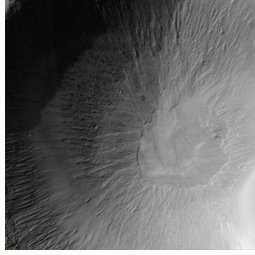
Sequence of 8 images showing RSL forming first on the north-facing slope (bottom), then switching to the south-facing slope (top). This change occurred close
to when the subsolar latitude moved from the north to the south of the latitude of this crater. In other words, RSL are most active on the slopes that receive more
direct sunlight. There was also an episode of inactivity and fading of RSL on the south-facing slope, when the air over this region was especially dusty
(Ls 235-246). Dusty air makes the daytime temperatures cooler, which may have temporarily stopped the RSL activity. (42MB)
RSL activity on complex topography in East Coprates Chasm
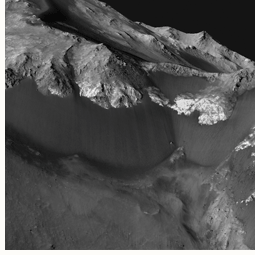
The use of digital terrain maps (DTMs), constructed from HiRISE stereo images, helps characterize the RSL phenomena. The images in other sequences have been DTM-projected
to looking straight down on the surface, but here that have been projected to a view a person or rover on the surface could observe. This sequence of 6 DTM-projected
images shows RSL forming and fading on west-facing slopes in east Coprates Chasma (latitude 14.7 degrees S, longitude 304.6 degrees E).
North is to the left, and most slopes face south. Flows appear to form from the upper-most 100 meters along this ridge, suggesting very concentrated sources,
possibly from the light- and mid-toned bedrock. Activity here is observed on all slope aspects and for the majority of the year, but RSL generally favor Sun-facing slopes. (13MB)
RSL and colorful fans along Coprates ridge
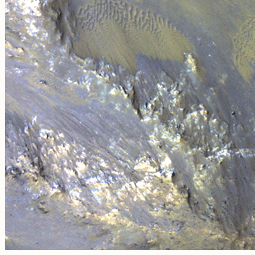
This site along Coprates ridge shows RSL on generally north-facing slopes in northern summer/southern winter (latitude 12.9 degrees S, longitude 295.5 degrees E).
South is down, and most slopes face northwest. IRB color (near-infrared, red, and blue-green bandpasses displayed as red, green, and blue, respectively) with
a min-max stretch illustrates the “greenish” fans and deposits associated with RSL. Two of these fans transition downslope into ripples
(
see also figure 2 of the Nature Geoscience paper). All of the
lineae here and in the larger scene appear to originate from relatively bright bedrock outcrops. Note that some of the fans that RSL flow over became
darker and brighter over time. Image is approximately 950 meters wide.
Animated GIF captions by: Matt Chojnacki and Alfred McEwen
Image credit: NASA/JPL/University of Arizona

Prolonged Magmatic Activity on Mars Inferred from the Detection of Felsic Rocks
James J. Wray, Sarah T. Hansen, Josef Dufek, Gregg A. Swayze, Scott L. Murchie, Frank P. Seelos, John R. Skok, Rossman P. Irwin III & Mark S. Ghiorso
Abstract
Rocks dominated by the silicate minerals quartz and feldspar are abundant in Earth's upper continental crust. Yet felsic rocks have not been widely
identified on Mars, a planet that seems to lack plate tectonics and the associated magmatic processes that can produce evolved siliceous melts on Earth.
If Mars once had a feldspar-rich crust that crystallized from an early magma ocean such as that on the Moon, erosion, sedimentation and volcanism have
erased any clear surface evidence for widespread felsic materials. Here we report near-infrared spectral evidence from the Compact Reconnaissance
Imaging Spectrometer for Mars onboard the Mars Reconnaissance Orbiter for felsic rocks in three geographically disparate locations on Mars.
Spectral characteristics resemble those of feldspar-rich lunar anorthosites, but are accompanied by secondary alteration products (clay minerals).
Thermodynamic phase equilibrium calculations demonstrate that fractional crystallization of magma compositionally similar to volcanic flows near
one of the detection sites can yield residual melts with compositions consistent with our observations. In addition to an origin by significant
magma evolution, the presence of felsic materials could also be explained by feldspar enrichment by fluvial weathering processes. Our finding of
felsic materials in several locations on Mars suggests that similar observations by the Curiosity rover in Gale crater may be more widely
applicable across the planet.
Read more at Nature Geoscience

Valles Marineris Dune Fields as Compared with other Martian Populations: Diversity of Dune Compositions, Morphologies, and Thermophysical Properties
Matthew Chojnacki, Devon M. Burr, Jeffrey E. Moersch
Abstract
Planetary dune field properties and their bulk bedform morphologies relate to regional wind patterns, sediment supply, climate, and topography. On Mars, major occurrences of
spatially contiguous low-albedo sand dunes are primarily found in three major topographic settings: impact craters, high-latitude basins, and linear troughs or valleys,
the largest being the Valles Marineris (VM) rift system. As one of the primary present day martian sediment sinks, VM holds nearly a third of the non-polar dune area on Mars.
Moreover, VM differs from other regions due to its unusual geologic, topographic, and atmospheric setting. Herein, we test the overarching hypothesis that VM dune fields are
compositionally, morphologically, and thermophysically distinct from other low- and mid-latitude (50 degrees N-50 degrees S latitude) dune fields. Topographic measurements of dune fields
and their underlying terrains indicate slopes, roughnesses, and reliefs to be notably greater for those in VM. Variable VM dune morphologies are shown with
topographically-related duneforms (climbing, falling, and echo dunes) located among spur-and-gully wall, landslide, and chaotic terrains, contrasting most martian dunes
found in more topographically benign locations (e.g., craters, basins). VM dune fields superposed on Late Amazonian landslides are constrained to have formed and/or
migrated over >10s of kilometers in the last 50 My to 1 Gy. Diversity of detected dune sand compositions, including unaltered ultramafic minerals and glasses
(e.g., high and low-calcium pyroxene, olivine, Fe-bearing glass), and alteration products (hydrated sulfates, weathered Fe-bearing glass), is more pronounced in VM.
Observations show heterogeneous sand compositions exist at the regional-, basinal-, dune field-, and dune-scales. Although not substantially greater than elsewhere,
unambiguous evidence for recent dune activity in VM is indicated from pairs of high-resolution images that include: dune deflation, dune migration, slip face modification
(e.g., alcoves), and ripple modification or migration, at varying scales (10s-100s m2). We conclude that VM dune fields are qualitatively and quantitatively distinct
from other low- and mid-latitude dune fields, most readily attributable to the rift’s unusual setting. Moreover, results imply dune field properties and aeolian
processes on Mars can be largely influenced by regional environment, which may have their own distinctive set of boundary conditions, rather than a globally homogenous
collection of aeolian sediment and bedforms.
Article on ScienceDirect
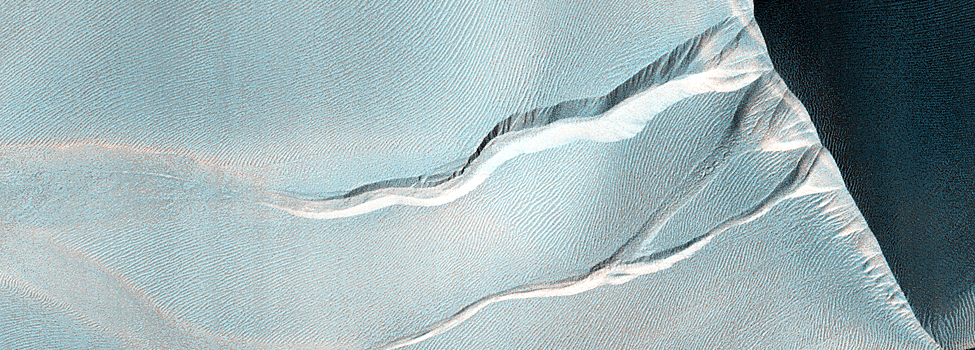
A New Dry Hypothesis for the Formation of Martian Linear Gullies
S. Diniega, C.J. Hansen, J.N. McElwaine, C.H. Hugenholtz, C.M. Dundas, A.S. McEwen, M.C. Bourke
ABSTRACT
Long, narrow grooves found on the slopes of martian sand dunes have been cited as evidence of liquid water via the hypothesis that melt-water
initiated debris flows eroded channels and deposited lateral levées. However, this theory has several short-comings for explaining the observed
morphology and activity of these linear gullies. We present an alternative hypothesis that is consistent with the observed morphology, location,
and current activity: that blocks of CO2 ice break from over-steepened cornices as sublimation processes destabilize the surface in the spring,
and these blocks move downslope, carving out levéed grooves of relatively uniform width and forming terminal pits. To test this hypothesis,
we describe experiments involving water and CO2 blocks on terrestrial dunes and then compare results with the martian features. Furthermore,
we present a theoretical model of the initiation of block motion due to sublimation and use this to quantitatively compare the expected behavior
of blocks on the Earth and Mars. The model demonstrates that CO2 blocks can be expected to move via our proposed mechanism on the Earth and Mars, a
nd the experiments show that the motion of these blocks will naturally create the main morphological features of linear gullies seen on Mars.
Article on ScienceDirect
JPL/NASA news release

The Current Martian Cratering Rate
I. J. Daubar, A. S. McEwen, S. Byrne, M. R. Kennedy, B. Ivanov
Abstract
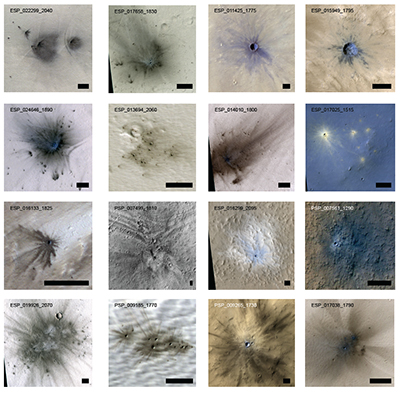
The discovery of 248 dated impact sites known to have formed within the last few
decades allows us to refine the current cratering rate and slope of the production function
at Mars. We use a subset of 44 of these new craters that were imaged before and after
impact by Mars Reconnaissance Orbiter's Context Camera -- a thoroughly searched data
set that minimizes biases from variable image resolutions. We find the current impact rate
is 1.65×10⁻⁶ craters with an effective diameter ≥ 3.9 meters / km
2 / year, with a
differential slope (power-law exponent) of -2.45 ± 0.36. This results in model ages that
are factors of three to five below the Hartmann (2005) and Neukum et al. (2001)/Ivanov
(2001) model production functions where they overlap in diameter. The best-fit
production function we measure has a shallower slope than model functions at these
sizes, but model function slopes are within the statistical errors. More than half of the
impacts in this size range form clusters, which is another reason to use caution when
estimating surface ages using craters smaller than ~50 meters in diameter.
Article on ScienceDirect
JPL/NASA news release
UANews release
Examples of craters listed in this paper (Click for larger version)
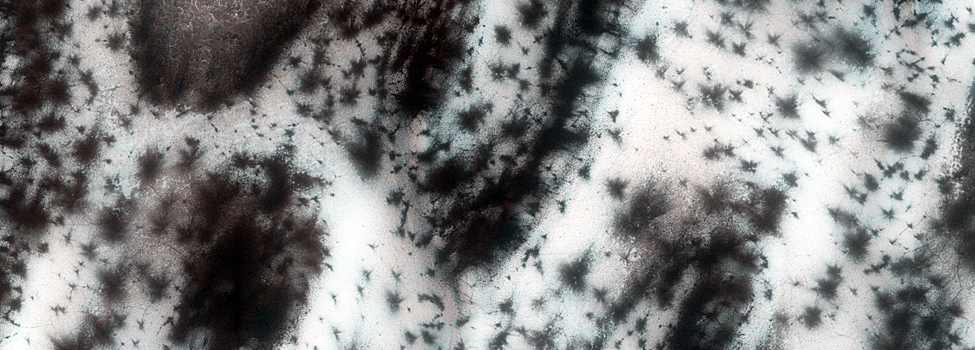
Observations of the Northern Seasonal Polar Cap on Mars: I. Spring Sublimation Activity and Processes
C.J. Hansen, S. Byrne, G. Portyankina, M. Bourke, C. Dundas, A. McEwen, M. Mellon, A. Pommerol, N. Thomas
Abstract
Spring sublimation of the seasonal CO2 northern polar cap is a dynamic process in the current Mars climate. Phenomena include dark fans of dune material
propelled out onto the seasonal ice layer, polygonal cracks in the seasonal ice, sand flow down slipfaces, and outbreaks of gas and sand around the dune margins.
These phenomena are concentrated on the north polar erg that encircles the northern residual polar cap. The Mars Reconnaissance Orbiter
has been in orbit for three Mars years, allowing us to observe three northern spring seasons. Activity is consistent with and well described by the
Kieffer model of basal sublimation of the seasonal layer of ice applied originally in the southern hemisphere. Three typical weak spots have been
identified on the dunes for escape of gas sublimed from the bottom of the seasonal ice layer: the crest of the dune, the interface of the dune
with the interdune substrate, and through polygonal cracks in the ice. Pressurized gas flows through these vents and carries out material
entrained from the dune. Furrows in the dunes channel gas to outbreak points and may be the northern equivalent of southern radially-organized
channels (“araneiform” terrain), albeit not permanent. Properties of the seasonal CO2 ice layer are derived from timing of seasonal events such
as when final sublimation occurs. Modification of dune morphology shows that landscape evolution is occurring on Mars today, driven by
seasonal activity associated with sublimation of the seasonal CO2 polar cap.
Article on ScienceDirect
See also:
Observations of the northern seasonal polar cap on Mars II: HiRISE
photometric analysis of evolution of northern polar dunes in spring
Observations of the northern seasonal polar cap on Mars III:
CRISM/HiRISE observations of spring sublimation
JPL/NASA news release
Partial List of Observations in this Paper
PSP_009122_2600
ESP_016032_2600
ESP_016388_2600
ESP_024537_2600
ESP_024669_2600
ESP_025104_2600
ESP_025315_2600
ESP_025737_2600
ESP_026080_2600

Earth-like Sand Fluxes on Mars
N.T. Bridges, F. Ayoub, J-P. Avouac, S. Leprince, A. Lucas & S. Mattson
Abstract
Strong and sustained winds on Mars have been considered rare, on the basis of surface meteorology measurements and global circulation models,
raising the question of whether the abundant dunes and evidence for wind erosion seen on the planet are a current process. Recent studies showed
sand activity, but could not determine whether entire dunes were moving—implying large sand fluxes—or whether more localized and surficial
changes had occurred. Here we present measurements of the migration rate of sand ripples and dune lee fronts at the Nili Patera dune field. We
show that the dunes are near steady state, with their entire volumes composed of mobile sand. The dunes have unexpectedly high sand fluxes, similar,
for example, to those in Victoria Valley, Antarctica, implying that rates of landscape modification on Mars and Earth are similar.
Read the UANews press release
Read the Nature article
Observations in this Paper
PSP_004339_1890
PSP_005684_1890
ESP_017762_1890
ESP_018039_1890
Digital terrain model
Animated GIFs
PSP_004339_1890 and PSP_005684_1890
PSP_005684_1890 and ESP_017762_1890 (October 2007 and May 2010)
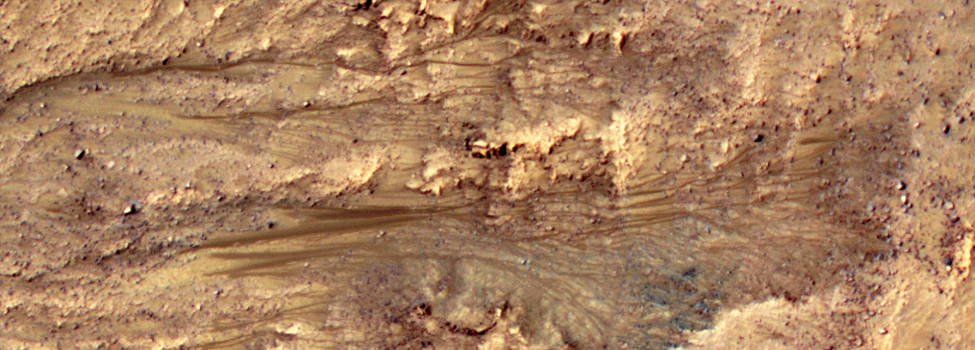
Seasonal Flows on Warm Martian Slopes
Alfred S. McEwen, Lujendra Ojha, Colin M. Dundas, Sarah S. Mattson, Shane Byrne, James J. Wray, Selby C. Cull, Scott L. Murchie, Nicolas Thomas, Virginia C. Gulick
Abstract
Water likely flowed across ancient Mars, but whether it ever exists as a liquid on the surface today remains debatable. Recurring slope lineae (RSL)
are narrow (0.5-5 m), relatively dark markings on steep (25°-40°) slopes; repeat MRO/HiRISE images show them to appear and incrementally grow during
warm seasons and fade in cold seasons. They extend downslope from bedrock outcrops, often associated with small channels, and hundreds of them
form in rare locations. RSL appear and lengthen in the late southern spring/summer from 48°S to 32°S latitudes favoring equator-facing slopes--times
and places with peak surface temperatures from ~250-300 K. Liquid brines near the surface might explain this activity, but the exact mechanism and source of water are not understood.
Science: Is Mars Weeping Salty Tears?
University of Arizona press release
View our breakout page for this paper

Seasonal Erosion and Restoration of Mars’ Northern Polar Dunes
C. J. Hansen, M. Bourke, N. T. Bridges, S. Byrne, C. Colon, S. Diniega, C. Dundas, K. Herkenhoff, A. McEwen, M. Mellon, G. Portyankina, and N. Thomas
Abstract
Despite radically different environmental conditions, terrestrial and Martian dunes bear a strong resemblance, indicating that the basic processes of
saltation and grainfall (sand avalanching down the dune slipface) operate on both worlds. Here we show that Martian dunes are subject to an additional
modification process not found on the Earth: springtime sublimation of Mars’ CO2 seasonal polar caps. Numerous dunes in Mars’ north polar region have
experienced morphological changes within a Mars year, detected in images acquired by the High Resolution Imaging Science Experiment (HiRISE) on the
Mars Reconnaissance Orbiter (MRO). Dunes show new alcoves, gullies, and dune apron extension. This is followed by remobilization of the fresh deposits
by the wind, forming ripples and erasing gullies. The widespread nature of these rapid changes, and the pristine appearance of most dunes in the area,
implicates active sand transport in the vast polar erg in Mars’ current climate.
Full article in Science
Read the University of Arizona press release
Observations in this article
PSP_007962_2635
PSP_008968_2650
PSP_009105_2640
PSP_009324_2650
ESP_015935_2640
ESP_016256_2635
ESP_016546_2635
ESP_016836_2635
ESP_017768_2640
ESP_017974_2650
PSP_010019_2635
ESP_018036_2635
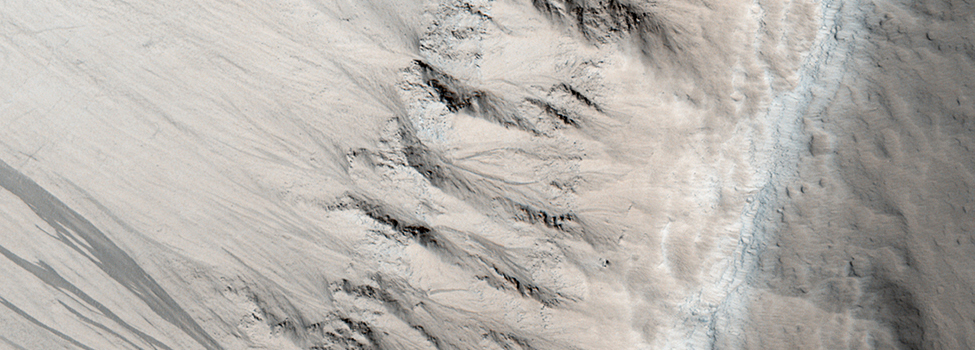
Discovery of Columnar Jointing on Mars
M.P. Milazzo, L.P. Keszthelyi, W.L. Jaeger, M. Rosiek, S. Mattson, C. Verba, R.A. Beyer, P.E. Geissler,
A.S. McEwen, and the HiRISE Team
Asbtract
We report on the discovery of columnar jointing in Marte Valles, Mars. These columnar lavas were discovered in the wall of a pristine,
16-km-diameter impact crater and exhibit the features of terrestrial columnar basalts. There are discontinuous outcrops along
the entire crater wall, suggesting that the columnar rocks covered a surface area of at least 200 sq. km, assuming that the rocks obliterated
by the impact event were similarly jointed. We also see columns in the walls of other fresh craters in the nearby volcanic plains
of Elysium Planitia-Amazonis Planitia, which include Marte Vallis, and in a well-preserved crater in northeast Hellas.
Full article in Geology
Read the USGS news release
Observation cited in this article
PSP_005917_2020
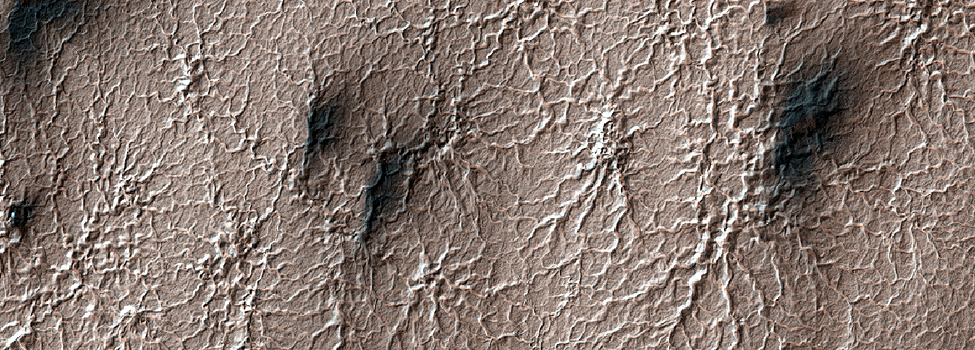
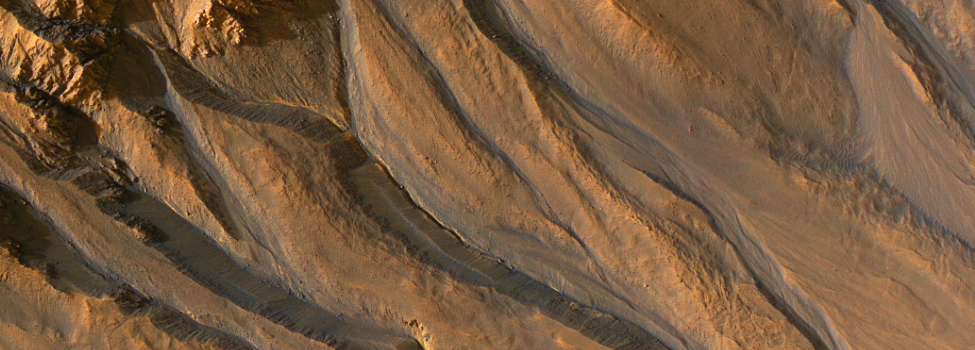
A Closer Look at Water-Related Geologic Activity on Mars
Alfred S. McEwen
HiRISE images reveal (1) abundant boulders in surface units previously interpreted as fine-grained deposits
from water or the air; (2) further evidence for water-carved gullies, although the most recent bright gully deposits
could have been dry flows; and (3) evidence that recent large craters were the result of impact into volatile-rich ground.
These results should help focus future exploration of Mars.
Read the article
Download the "Science" cover image
Cover image (PSP_003583_1425)
4048 x 5082; 59 MB
List of images cited in this paper
TRA_000846_2475
PSP_001481_1875
PSP_001508_2400
PSP_001538_2035
PSP_001714_1415
PSP_001810_2175
PSP_001846_1415
PSP_001846_2390
PSP_001964_2275
PSP_001978_1445
PSP_002158_2035
PSP_002172_1410
PSP_002200_1380
PSP_002812_1330
PSP_002932_1445
PSP_003252_1425
PSP_003583_1425
PSP_003596_1435
PSP_003942_2120
PSP_004229_1435
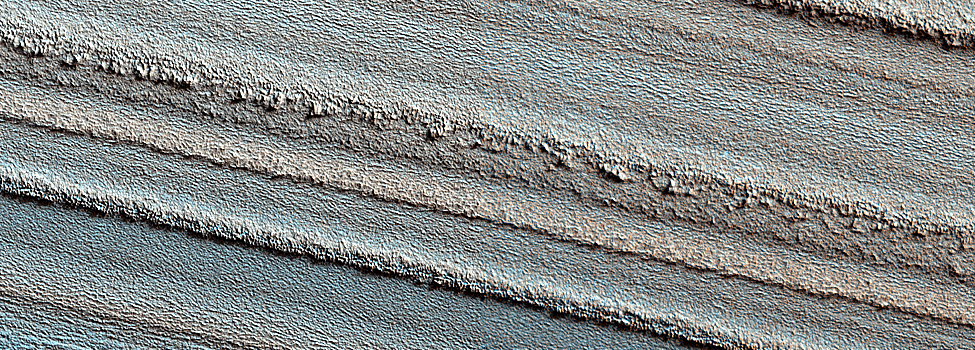
Meter-scale Morphology of the North Polar Region of Mars
Kenneth E. Herkenhoff
With detailed images from the HiRISE camera, a dome of layered ice deposits on the north pole of Mars comes into sharper
focus, showing evidence of recent mass wasting, flow and debris accumulation.
Read the article
List of Images cited in this paper
TRA_000845_2645
TRA_000863_2640
PSP_001412_2650
PSP_001488_2665
PSP_001550_2640
PSP_001636_2760
PSP_001738_2670
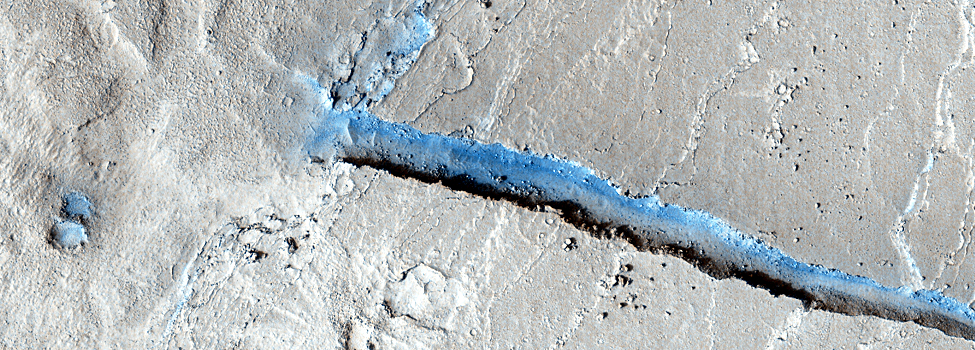
Athabasca Valles, Mars: A Lava-Draped Channel System
Windy L. Jaeger
Athabasca Valles is a young “outflow” channel system in the equatorial region of Mars. Most researchers agree
that it was carved by catastrophic floods of water, and some believe that frozen floodwaters survive to this day
on the channel floor. However, new HiRISE observations reveal that Athabasca Valles is entirely coated by a
thin veneer of solidified lava. The lava poured from a fissure, filled the channels, and then drained
downstream leaving behind a thin layer of hard rock to coat and preserve the channel system.
Read the article
List of Images cited in this paper
PSP_001408_1900
PSP_001540_1890
PSP_001606_1900
PSP_002938_1890
PSP_002661_1895
PSP_002174_1875
PSP_003294_1985


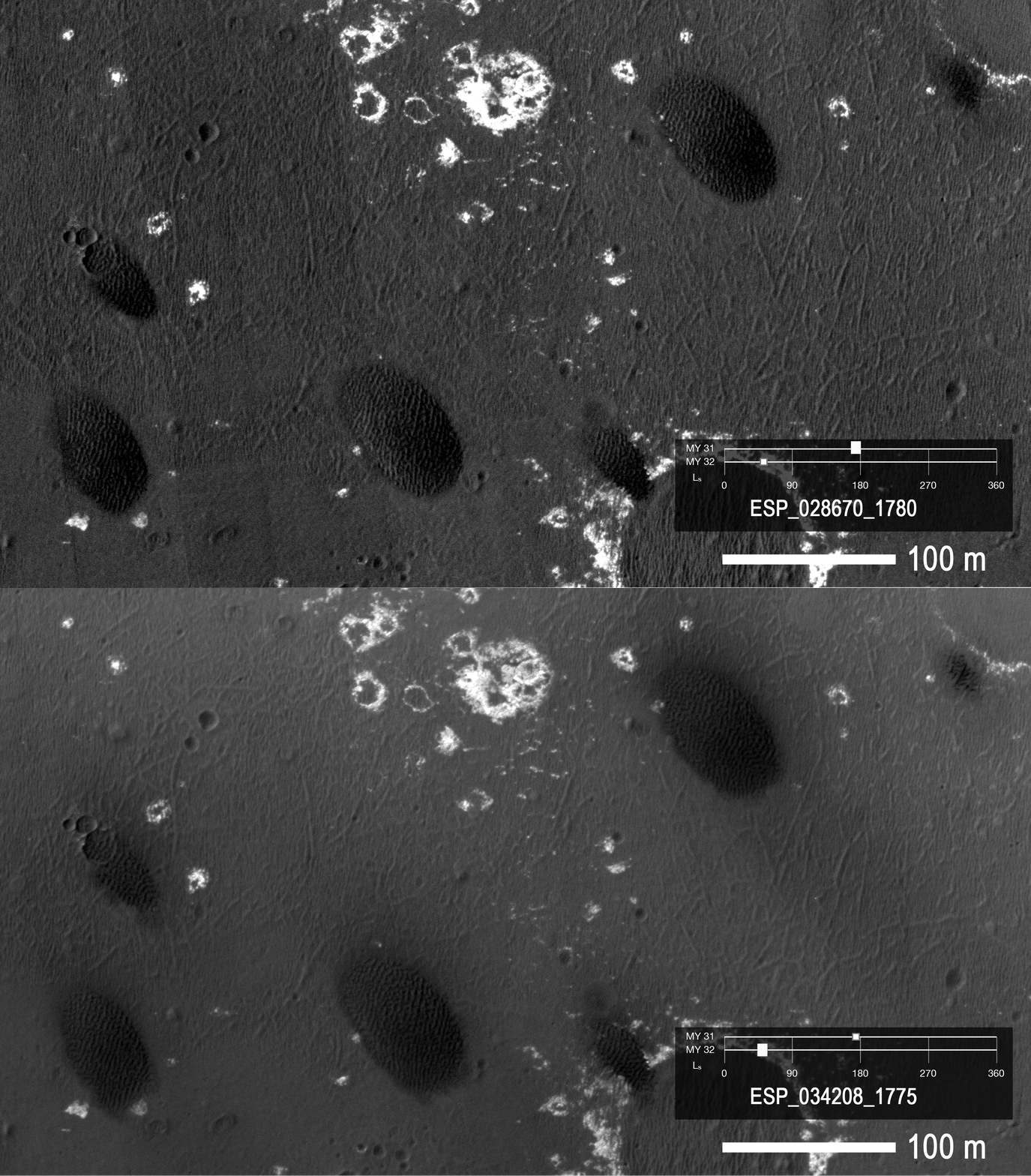
 Sequence of 5 HiRISE images of a heavily-dissected (eroded) hill in southern Juventae Chasm, Mars (latitude 4.7 degrees S, longitude 298.6 degrees E).
This sequence is from the recently completed Mars Year (31), and RSL were also seen here in Mars Year 28, so they have recurred. The season of these
images is late spring to early summer in the southern hemisphere, and include perihelion (Mars closest to the sun in its orbit). Activity is strongly
concentrated on the south-facing slopes, which are the warmest slopes this time of year. The RSL are closely associated with “small” (for Mars) gullies.
Images reduced to 1 m/pixel scale. (31MB)
Sequence of 5 HiRISE images of a heavily-dissected (eroded) hill in southern Juventae Chasm, Mars (latitude 4.7 degrees S, longitude 298.6 degrees E).
This sequence is from the recently completed Mars Year (31), and RSL were also seen here in Mars Year 28, so they have recurred. The season of these
images is late spring to early summer in the southern hemisphere, and include perihelion (Mars closest to the sun in its orbit). Activity is strongly
concentrated on the south-facing slopes, which are the warmest slopes this time of year. The RSL are closely associated with “small” (for Mars) gullies.
Images reduced to 1 m/pixel scale. (31MB)
 Sequence of 6 images showing a small area of steep slopes with RSL activity (latitude 14.7 degrees S, longitude 304.6 degrees E). The sequence is in Mars Year 31,
southern spring. Note that some of the fans that RSL flow over became darker and brighter over time
(see also figure S2 of the supplementary material of the Nature Geoscience paper).
There are many other such fans in this region that darkened and brightened at the same times. Image 0.25 m/pixel scale; scene 480 meters wide. (18MB)
Sequence of 6 images showing a small area of steep slopes with RSL activity (latitude 14.7 degrees S, longitude 304.6 degrees E). The sequence is in Mars Year 31,
southern spring. Note that some of the fans that RSL flow over became darker and brighter over time
(see also figure S2 of the supplementary material of the Nature Geoscience paper).
There are many other such fans in this region that darkened and brightened at the same times. Image 0.25 m/pixel scale; scene 480 meters wide. (18MB)
 Sequence of 8 images showing RSL forming first on the north-facing slope (bottom), then switching to the south-facing slope (top). This change occurred close
to when the subsolar latitude moved from the north to the south of the latitude of this crater. In other words, RSL are most active on the slopes that receive more
direct sunlight. There was also an episode of inactivity and fading of RSL on the south-facing slope, when the air over this region was especially dusty
(Ls 235-246). Dusty air makes the daytime temperatures cooler, which may have temporarily stopped the RSL activity. (42MB)
Sequence of 8 images showing RSL forming first on the north-facing slope (bottom), then switching to the south-facing slope (top). This change occurred close
to when the subsolar latitude moved from the north to the south of the latitude of this crater. In other words, RSL are most active on the slopes that receive more
direct sunlight. There was also an episode of inactivity and fading of RSL on the south-facing slope, when the air over this region was especially dusty
(Ls 235-246). Dusty air makes the daytime temperatures cooler, which may have temporarily stopped the RSL activity. (42MB)
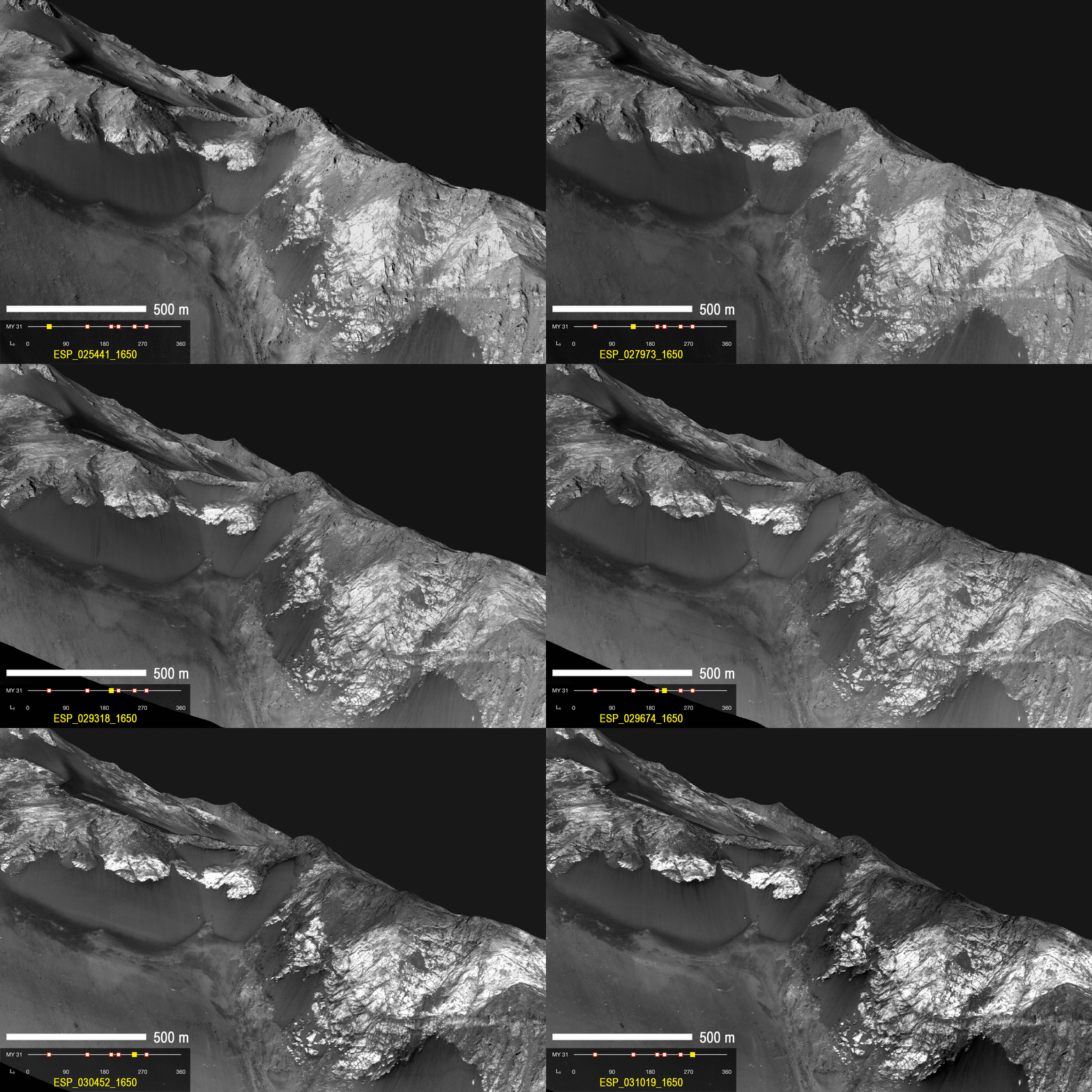 The use of digital terrain maps (DTMs), constructed from HiRISE stereo images, helps characterize the RSL phenomena. The images in other sequences have been DTM-projected
to looking straight down on the surface, but here that have been projected to a view a person or rover on the surface could observe. This sequence of 6 DTM-projected
images shows RSL forming and fading on west-facing slopes in east Coprates Chasma (latitude 14.7 degrees S, longitude 304.6 degrees E).
North is to the left, and most slopes face south. Flows appear to form from the upper-most 100 meters along this ridge, suggesting very concentrated sources,
possibly from the light- and mid-toned bedrock. Activity here is observed on all slope aspects and for the majority of the year, but RSL generally favor Sun-facing slopes. (13MB)
The use of digital terrain maps (DTMs), constructed from HiRISE stereo images, helps characterize the RSL phenomena. The images in other sequences have been DTM-projected
to looking straight down on the surface, but here that have been projected to a view a person or rover on the surface could observe. This sequence of 6 DTM-projected
images shows RSL forming and fading on west-facing slopes in east Coprates Chasma (latitude 14.7 degrees S, longitude 304.6 degrees E).
North is to the left, and most slopes face south. Flows appear to form from the upper-most 100 meters along this ridge, suggesting very concentrated sources,
possibly from the light- and mid-toned bedrock. Activity here is observed on all slope aspects and for the majority of the year, but RSL generally favor Sun-facing slopes. (13MB)
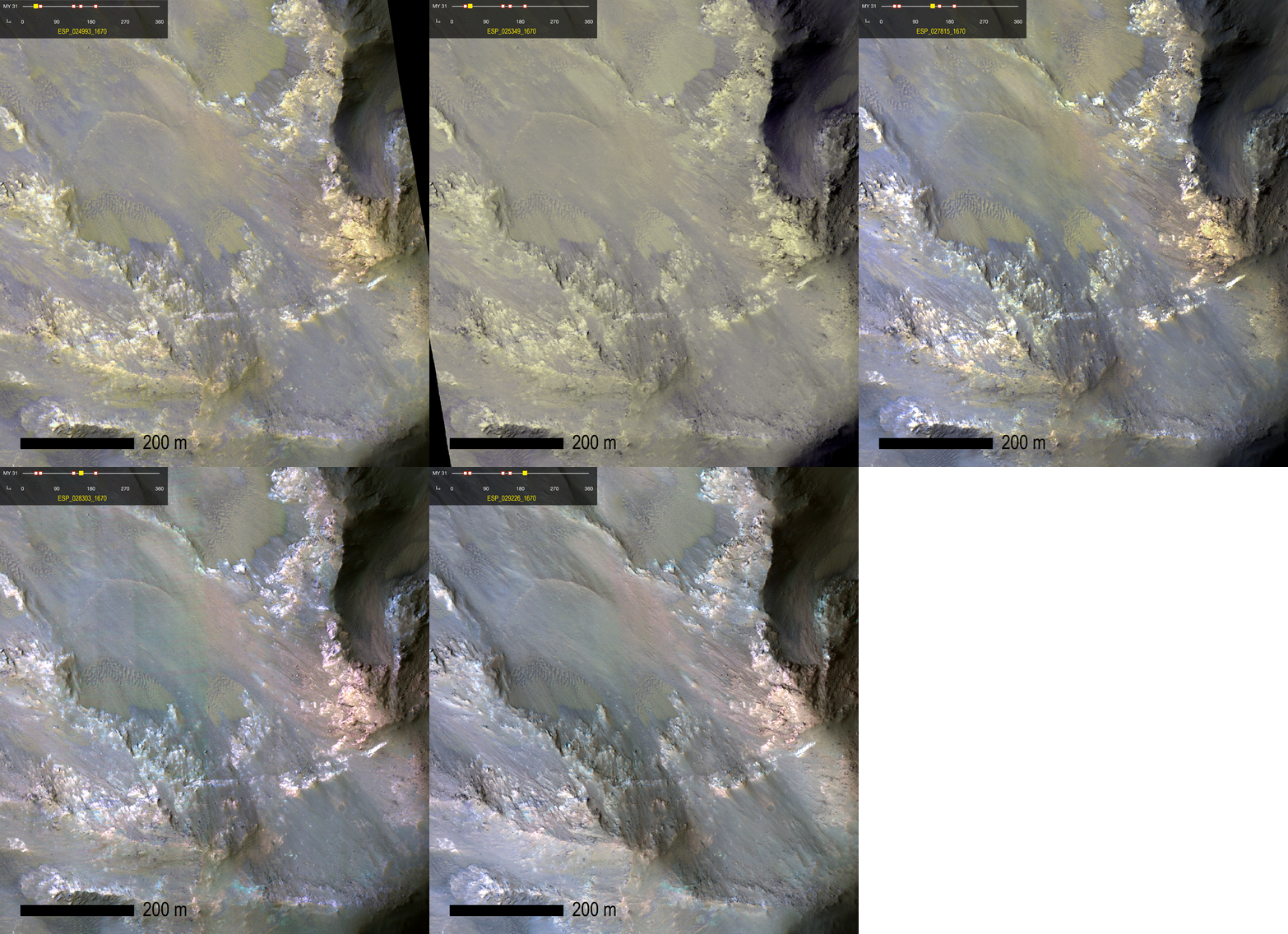 This site along Coprates ridge shows RSL on generally north-facing slopes in northern summer/southern winter (latitude 12.9 degrees S, longitude 295.5 degrees E).
South is down, and most slopes face northwest. IRB color (near-infrared, red, and blue-green bandpasses displayed as red, green, and blue, respectively) with
a min-max stretch illustrates the “greenish” fans and deposits associated with RSL. Two of these fans transition downslope into ripples
(see also figure 2 of the Nature Geoscience paper). All of the
lineae here and in the larger scene appear to originate from relatively bright bedrock outcrops. Note that some of the fans that RSL flow over became
darker and brighter over time. Image is approximately 950 meters wide.
This site along Coprates ridge shows RSL on generally north-facing slopes in northern summer/southern winter (latitude 12.9 degrees S, longitude 295.5 degrees E).
South is down, and most slopes face northwest. IRB color (near-infrared, red, and blue-green bandpasses displayed as red, green, and blue, respectively) with
a min-max stretch illustrates the “greenish” fans and deposits associated with RSL. Two of these fans transition downslope into ripples
(see also figure 2 of the Nature Geoscience paper). All of the
lineae here and in the larger scene appear to originate from relatively bright bedrock outcrops. Note that some of the fans that RSL flow over became
darker and brighter over time. Image is approximately 950 meters wide.